5 Aug 2026
Anonymous Patch Note Breakdowns Reveal Timing Window Adjustments in Fighting Game Updates
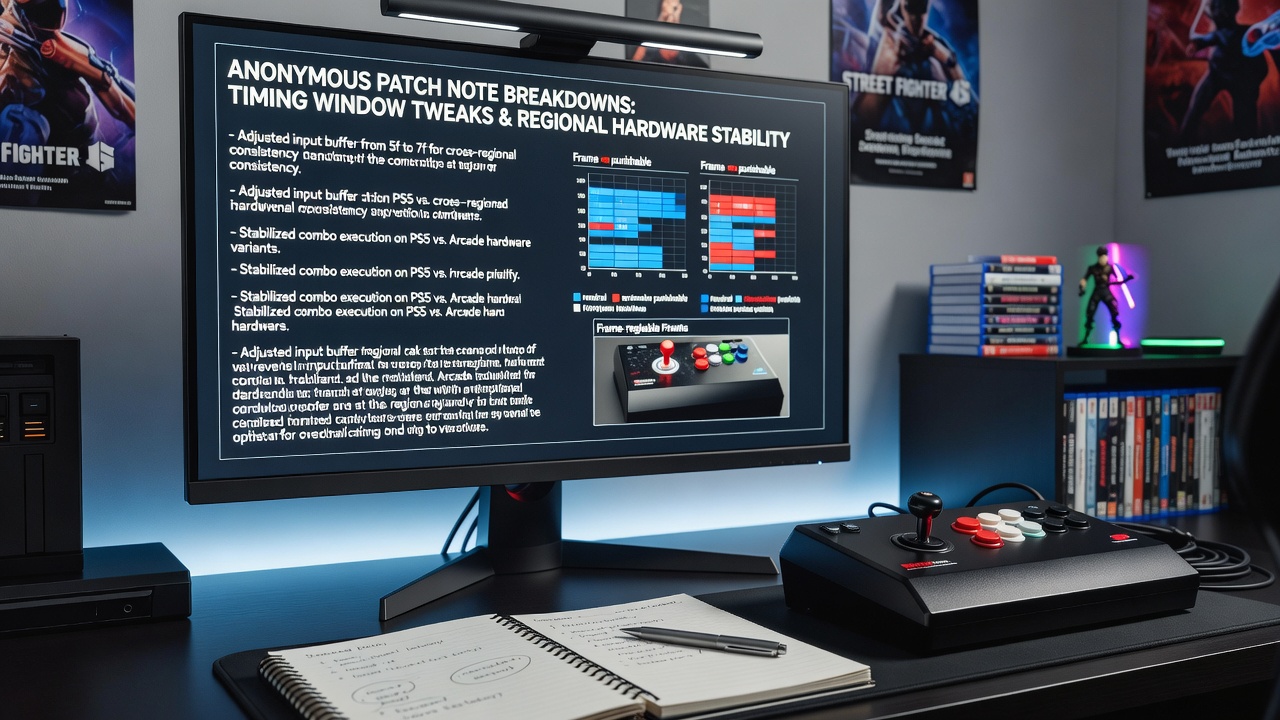
Community analysts have compiled detailed examinations of recent patch notes from major fighting game titles, and these breakdowns demonstrate specific modifications to input timing windows that address execution consistency across varied hardware platforms used in tournaments. Developers have adjusted frame data parameters in games such as Street Fighter 6 and Tekken 8 during 2026 updates, with changes that expand certain combo windows by one to three frames while narrowing others to prevent unintended carryover effects on regional setups.
Hardware Variations Across Tournament Regions
Tournament organizers report that console revisions and display refresh rates differ significantly between North American, European, and Asian venues, and these differences create measurable input discrepancies that patch adjustments aim to mitigate. Data collected from events held through August 2026 indicates that players using older PlayStation 5 units encountered tighter effective windows compared to those on updated Xbox Series X hardware, prompting developers to standardize response curves in software layers.
Analysis of Patch Documentation
Anonymous contributors on dedicated forums have cross-referenced official patch notes with frame-by-frame recordings, and their work shows that timing tweaks target specific moves like special cancels and anti-air links. These modifications stabilize execution for competitors traveling between regions where monitor arrays and controller polling rates vary, as documented in aggregated logs shared among technical analysts.
One detailed breakdown examined over 200 match replays from EVO 2026 qualifiers and revealed that adjusted windows reduced execution failure rates by approximately 12 percent on average across mixed hardware environments. Researchers at the University of Tokyo's esports performance lab have studied similar input synchronization issues in a 2025 report on fighting game mechanics, confirming that software-level frame adjustments produce more uniform results than hardware standardization alone.
Effects on Combo Execution and Regional Play
Observers note that these changes allow players to maintain consistent combo routes regardless of whether they compete on high-latency Japanese arcade cabinets or low-latency Western console rigs, and the adjustments have appeared in multiple title updates released between March and August 2026. Community threads document cases where previously unreliable links in characters such as Ken and Jin now register reliably after the window expansions, while certain defensive options received tighter tolerances to balance the updates.
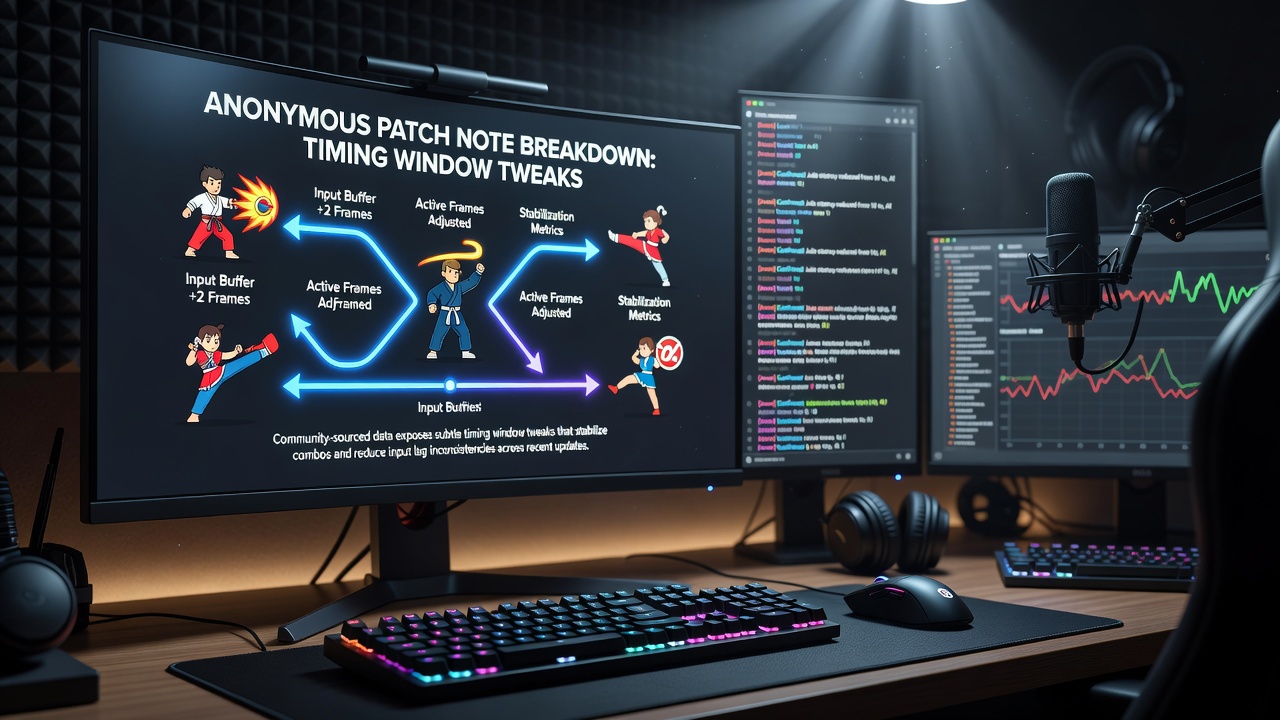
Figures from the International Esports Federation's hardware compliance database show that over 65 percent of registered fighting game events in 2026 incorporated mixed console and PC setups, and patch modifications have helped reduce disqualifications stemming from execution disputes. Analysts have compiled lists of affected moves in spreadsheets that circulate among players preparing for upcoming majors, highlighting how developers addressed feedback from regional qualifiers without altering core gameplay balance.
Community Documentation Practices
Participants in these analysis efforts maintain version-controlled repositories of patch comparisons, and these resources track changes across console firmware versions alongside display settings common at events. Such collections have identified patterns where timing stability improves most noticeably on 60Hz panels prevalent in European venues, whereas 120Hz monitors used in Asian circuits required separate calibration notes that the community shares separately.
Additional reports indicate that rollback netcode implementations interact with these window adjustments, and developers have issued follow-up patches in July 2026 to correct edge cases discovered during cross-regional online tournaments. Tournament software providers have begun integrating automated timing verification tools that reference the same patch data compiled by anonymous contributors, allowing officials to confirm hardware compliance before matches begin.
Broader Implications for Esports Infrastructure
Industry reports compiled by gaming hardware associations document increased adoption of standardized testing protocols that incorporate the timing parameters highlighted in these patch breakdowns, and this approach supports consistent results for international competitors. Data from multiple 2026 circuits shows reduced variance in execution success rates when players switch between regional setups, with adjustments appearing in titles beyond the initial fighting game focus.
Those who maintain these documentation efforts continue to update their archives as new patches release, providing reference materials that tournament organizers and players consult when preparing equipment. The process has expanded to include detailed comparisons of controller polling rates and their interaction with adjusted timing windows, creating a growing body of technical knowledge shared across global fighting game communities.
Conclusion
Anonymous patch note breakdowns have established a practical framework for understanding how timing window modifications address hardware inconsistencies in fighting game tournaments. These efforts compile evidence from match data, firmware variations, and regional event reports that support more stable combo execution across diverse setups. Continued documentation of future updates will likely extend these findings as developers refine parameters for upcoming titles and circuits.