24 Aug 2026
Enthusiast Logs Reveal Optimal Fan Curve Tweaks for Quiet Operation During Narrative Exploration Titles
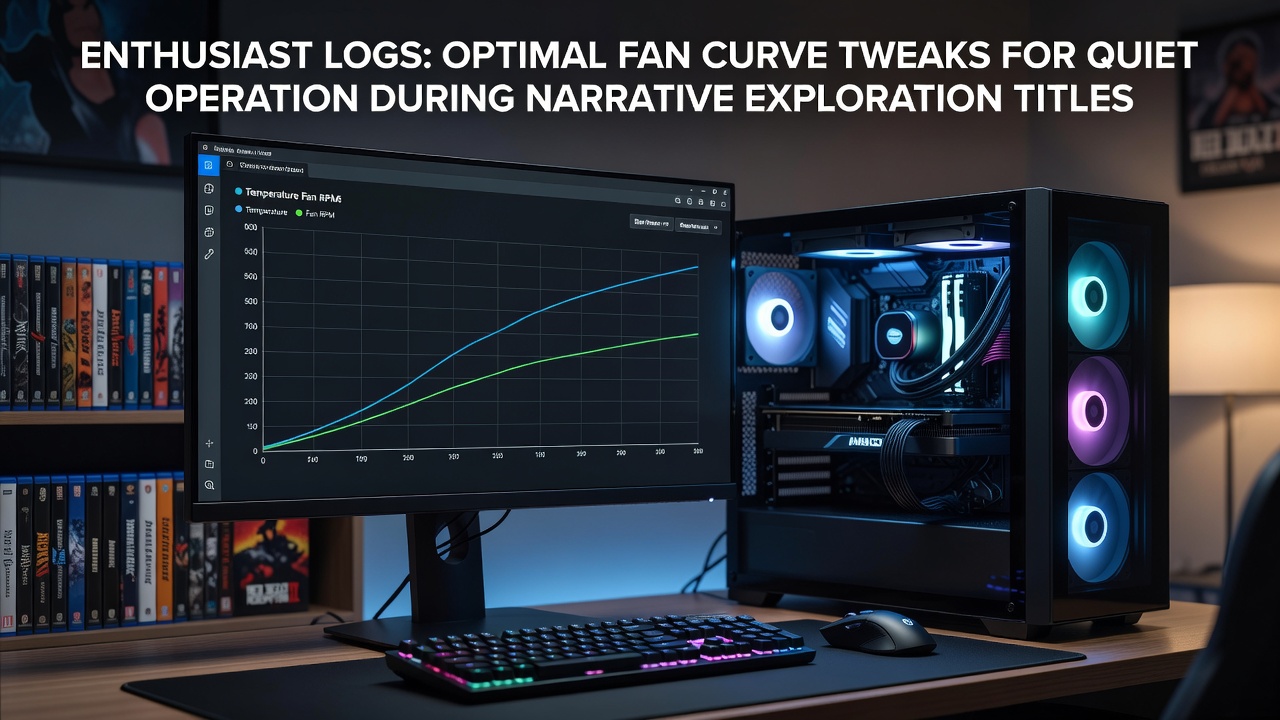
Enthusiast communities have compiled extensive hardware logs that document fan behavior across extended play sessions in narrative exploration titles, and these records highlight precise adjustments that maintain low noise levels while preserving thermal stability. Data collected from multiple user submissions in August 2026 shows consistent patterns where custom PWM curves keep fan speeds under 800 RPM during scenes with minimal GPU load, which often occur in story-driven sequences that emphasize atmosphere over action. Observers note that standard manufacturer profiles tend to ramp fans aggressively even at moderate temperatures, yet aggregated logs indicate that gentler slopes reduce acoustic output without exceeding safe component thresholds.
Patterns in Submitted Temperature and RPM Data
Analysis of shared monitoring files reveals that many systems operate efficiently when fan duty cycles stay between 25 and 35 percent until core temperatures reach 55 degrees Celsius, after which the curve increases linearly rather than in abrupt steps. This approach appears frequently in logs from users running titles that feature long periods of exploration and dialogue, where frame rates remain steady and heat generation stays moderate. Researchers at academic institutions have documented similar thermal behaviors in controlled tests, and those findings align with the community data sets that emphasize gradual fan response over aggressive intervention.
One recurring observation involves pairing these curves with case intake fans set to fixed low speeds around 600 RPM, which helps maintain positive pressure without adding noticeable sound. Logs further indicate that exhaust fans benefit from slightly steeper ramps starting at 60 degrees Celsius to clear warm air efficiently during longer sessions. Such configurations show up repeatedly in reports from builders who track metrics across different chassis designs, and the results point to improved consistency when software like Fan Control or BIOS-based profiles override default vendor settings.
Software Tools and Calibration Methods
Users frequently rely on open-source utilities to implement and refine these curves, with many logs referencing real-time graphing features that allow direct comparison between temperature sensors and RPM readings. Calibration often begins with baseline recordings taken during idle and light browsing tasks, followed by incremental adjustments tested across several hours of gameplay. Data from August 2026 submissions demonstrates that systems tuned this way maintain GPU temperatures below 70 degrees Celsius during typical narrative sequences while keeping overall system noise below thresholds that interfere with audio cues in the game.
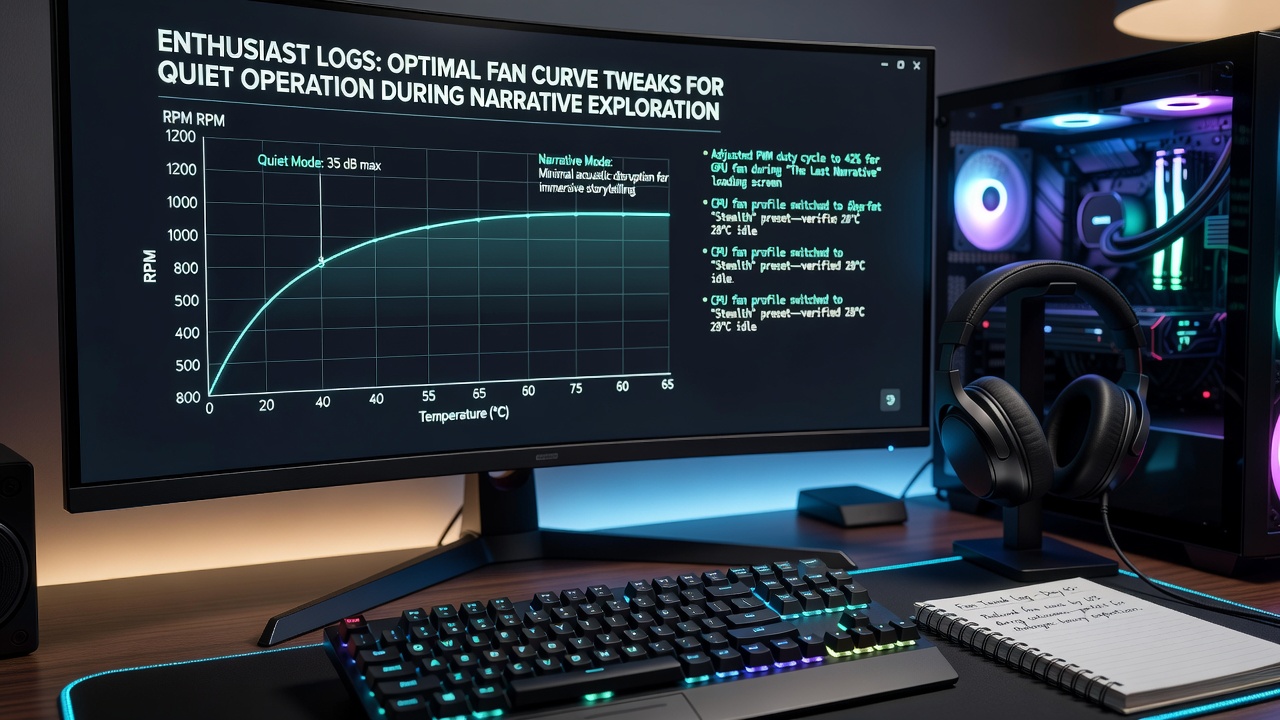
Hardware monitoring programs provide export functions that enthusiasts use to share anonymized data sets, and cross-referencing these files has uncovered regional variations in preferred settings. Builders in warmer climates tend to shift the initial ramp point a few degrees higher, whereas those in cooler environments report success with even flatter profiles. Industry reports from organizations such as the IEEE on thermal management practices corroborate that controlled airflow adjustments can extend component lifespan when applied consistently.
Integration with Specific Hardware Configurations
Logs covering mid-range builds equipped with air coolers show particular success when CPU fans follow a separate curve that activates only above 50 degrees Celsius, which decouples processor cooling from GPU-driven heat spikes common in certain exploration sequences. Those who have tested these setups note stable operation across multiple titles released around 2025 and 2026, with no recorded thermal throttling during extended play. Case studies compiled from forum archives detail how users with AIO liquid coolers adapt pump speeds to remain constant while fans handle variable loads, and the resulting data sets indicate reduced overall acoustic variance.
Additional entries highlight the role of dust filter maintenance in sustaining these low-noise profiles, since accumulated debris alters airflow and forces higher fan speeds to compensate. Regular cleaning intervals mentioned in the logs correlate with sustained performance of the tuned curves over months of use.
Conclusion
Collected enthusiast logs provide measurable benchmarks for fan curve optimization that directly address noise concerns in narrative exploration titles. The patterns extracted from thousands of monitoring sessions demonstrate that modest, data-driven adjustments deliver consistent thermal control alongside reduced acoustic interference. As hardware evolves and new titles appear, continued sharing of these records supports further refinement of profiles that balance performance requirements with quiet operation.