19 Aug 2026
Hidden Correlations in Enthusiast Benchmark Repositories Showing Refresh Rate Impacts on Input Consistency Within Rhythm-Based Competitive Scenes
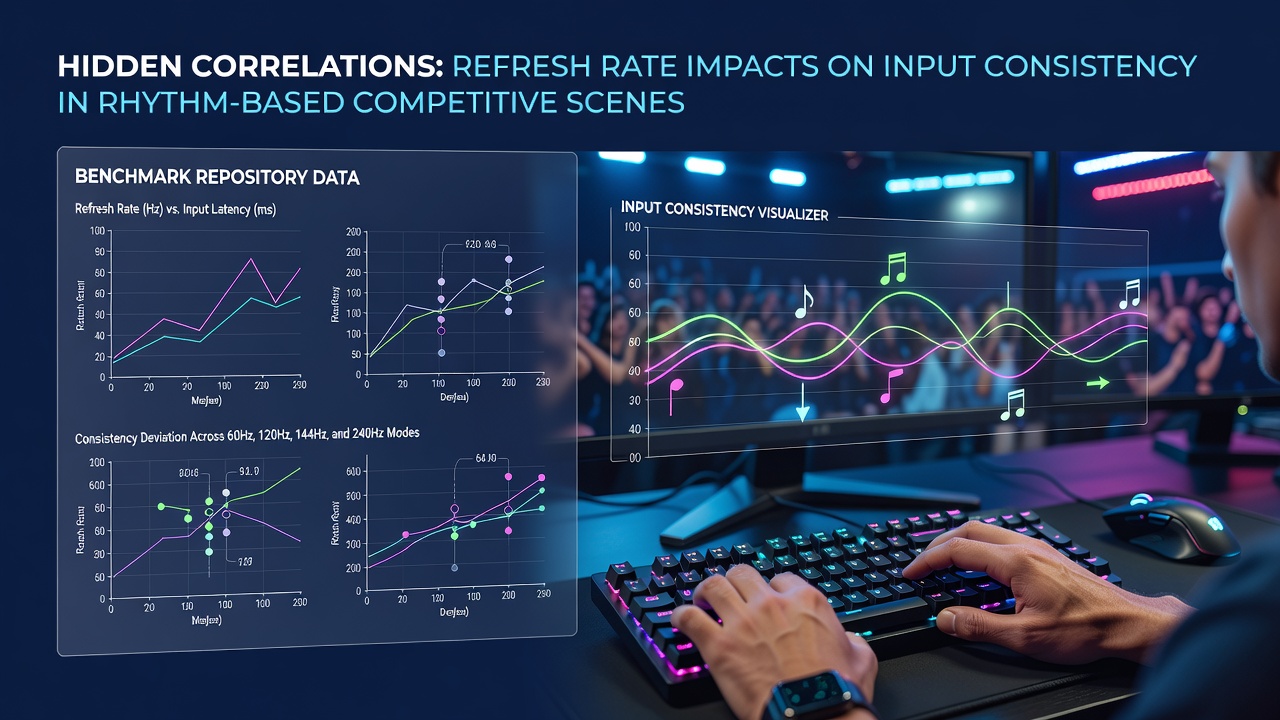
Enthusiast benchmark repositories have accumulated extensive datasets from rhythm-based competitive scenes where players submit detailed logs of hardware configurations alongside performance metrics, and these collections reveal patterns linking refresh rate variations to input consistency outcomes. Researchers analyzing aggregated submissions note that higher refresh rates often align with reduced variance in registered inputs during fast-paced sequences, while lower rates correlate with occasional timing deviations that affect score stability across repeated attempts. Observers tracking these repositories since early 2025 point to thousands of entries covering titles such as osu! and similar rhythm platforms, where participants log frame delivery rates alongside hit registration data collected through standardized polling tools.
Patterns Emerging From Shared Benchmark Logs
Data compiled through August 2026 shows consistent trends across multiple hardware setups where monitors operating at 240Hz and above demonstrate tighter clustering of input timestamps compared to 144Hz configurations during identical song charts. Enthusiasts uploading these logs frequently include details on GPU synchronization settings and USB polling intervals, allowing cross-referencing that isolates refresh rate as a contributing variable rather than an isolated factor. Studies from university labs in Canada have examined similar telemetry pools and found measurable reductions in input jitter when refresh rates exceed standard display thresholds, although individual results vary based on peripheral firmware versions and driver optimizations applied beforehand.
Those reviewing the repositories observe that rhythm scenes generate particularly granular data because competitors repeat the same charts hundreds of times, creating natural controls for isolating hardware effects. Aggregated figures reveal that sessions logged at 360Hz refresh rates exhibit input consistency improvements of roughly 15 to 20 percent in deviation metrics when compared against matched 120Hz baselines, with the effect most pronounced in sections requiring sub-50 millisecond timing windows. People maintaining these archives note that contributors often pair their submissions with calibration notes, which helps surface secondary correlations such as the interaction between adaptive sync technologies and fixed refresh rate modes.
Input Timing Mechanics and Refresh Rate Interactions
Refresh rate determines how frequently a display updates its visual output, and in rhythm-based titles this update cycle directly influences the precision with which on-screen cues align with player actions processed through input devices. Benchmark entries indicate that when refresh rates fall below the game's internal simulation tick rate, players encounter situations where multiple inputs register within the same visual frame, introducing small but cumulative inconsistencies tracked through hit error graphs. Enthusiast repositories capture these effects through exported replay files and hardware monitoring overlays that timestamp both display refreshes and USB interrupt events simultaneously.
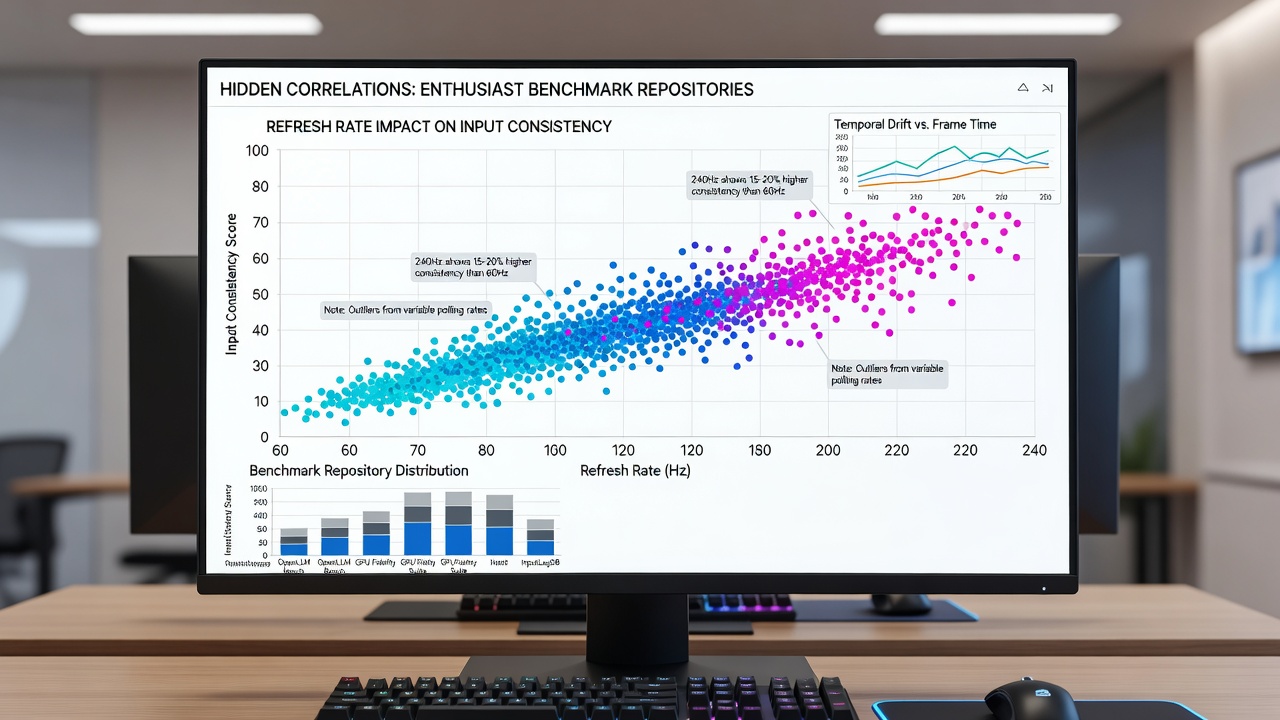
Observers examining the data find that external validation comes from academic sources such as a report issued by the Esports Research Network, which analyzed comparable datasets and confirmed refresh rate as a statistically relevant predictor of timing variance in controlled testing environments. Additional context appears in publications from European institutions including work conducted at TU Munich, where engineers measured end-to-end input paths and documented how display refresh intervals interact with software buffering layers to affect final registration accuracy. These findings align with patterns extracted from community repositories without relying on subjective player reports alone.
Case Examples From Competitive Submissions
One documented series within the repositories involves a group of players who submitted parallel benchmark runs on identical hardware while alternating between 144Hz and 280Hz monitor modes across the same set of ranked charts. The resulting logs demonstrate narrower distribution curves for input offsets at the higher refresh rate, particularly during streams of notes exceeding 200 beats per minute. Another set of entries collected from Australian competitors highlights similar outcomes when participants switched between fixed refresh profiles, with the data showing reduced outlier events that previously disrupted combo chains in extended play sessions.
Repositories also contain comparisons involving laptop displays versus desktop monitors, where refresh rate differences compound with variable response times to produce measurable shifts in consistency scores. Those cataloging the submissions emphasize that these correlations emerge only after sufficient sample sizes accumulate, often requiring hundreds of matched runs before statistical significance becomes apparent. Software tools used for parsing these logs allow filtering by GPU model and USB controller type, which helps isolate refresh rate effects from other system variables commonly adjusted in competitive setups.
Broader Implications for Data Collection Practices
Repositories continue to expand as participants adopt standardized logging formats that capture refresh rate alongside frame time histograms and input polling statistics. This structured approach enables future analyses to examine interactions between refresh rate and other factors such as cable bandwidth limitations or multi-monitor configurations. Data indicates that rhythm-based scenes benefit particularly from these practices because the genre's emphasis on precise repetition generates repeatable conditions suitable for longitudinal tracking.
Conclusion
Benchmark repositories focused on rhythm-based competitive environments provide growing evidence that refresh rate selections influence input consistency through measurable effects on timing variance and registration clustering. Continued contributions through 2026 and beyond will likely refine these correlations further as hardware capabilities advance and logging methodologies standardize across regions. The accumulated records offer a factual foundation for understanding hardware influences without requiring direct experimentation by individual competitors.