27 Jul 2026
LAN Organizers Share Telemetry Data on Cable Routing for MMO Signal Stability
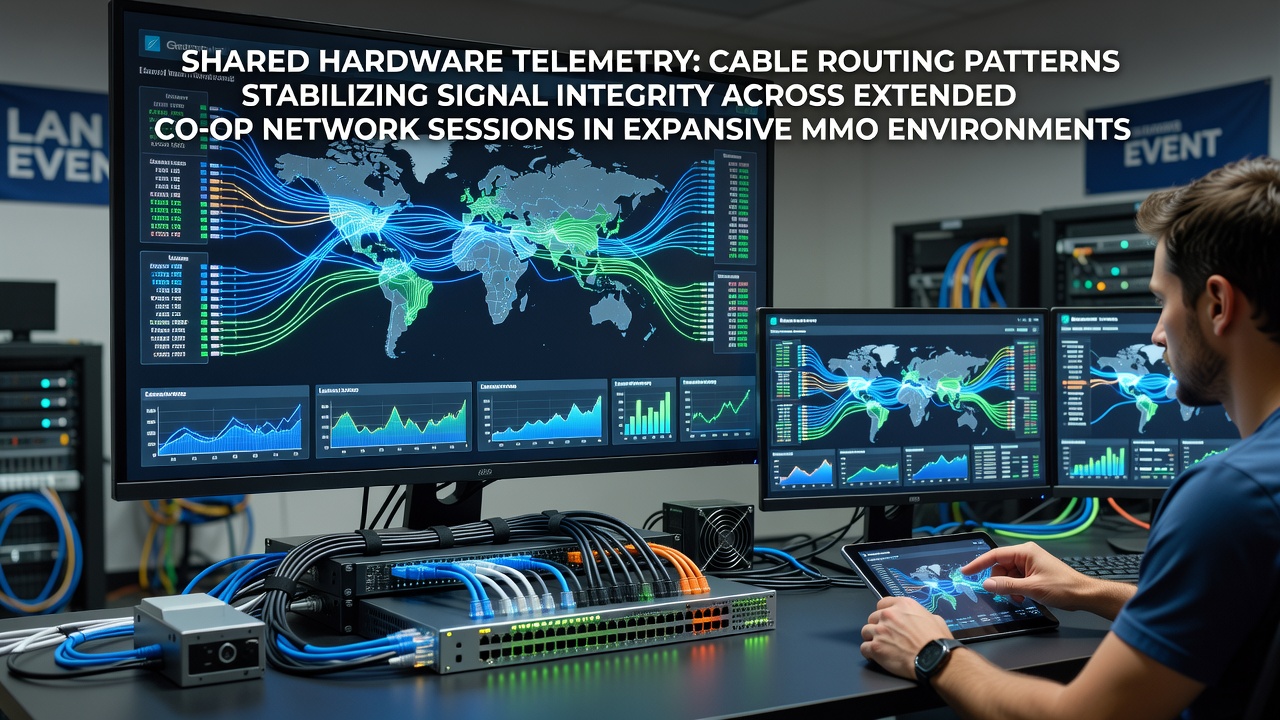 Data from multiple LAN events in 2025 and into July 2026 demonstrates how organizers collect hardware telemetry to identify cable routing configurations that reduce electromagnetic interference in large-scale MMO environments. These configurations support consistent signal integrity during co-op sessions that extend beyond eight hours, where participants rely on stable network connections for synchronized gameplay across expansive virtual worlds. Event teams record metrics such as packet loss rates, latency fluctuations, and connection drop frequency, then aggregate the results to map effective routing paths that separate data cables from power lines and high-voltage components. Telemetry analysis reveals recurring patterns where organizers route Ethernet cables along elevated paths away from GPU power supplies and cooling fans. This separation correlates with lower instances of signal degradation, particularly in venues hosting over 200 simultaneous MMO players. Studies conducted at events in North America and Europe show that bundled cables running parallel to electrical conduits experience up to 15 percent higher interference levels compared with separated layouts, according to reports from the IEEE Standards Association on network cabling practices. Organizers in Australia and Canada have adopted similar data-sharing protocols, publishing anonymized logs that highlight optimal distances between Cat6 or fiber lines and nearby power distribution units. These logs indicate that maintaining a minimum 30-centimeter gap between categories of cables decreases crosstalk, which helps sustain throughput during peak activity periods in titles requiring constant server-client synchronization. Participants in co-op raids benefit from these adjustments because reduced jitter prevents desynchronization events that can interrupt group coordination.
Patterns Identified Across Multiple Events
Analysis of telemetry pools from LAN organizers shows that star-shaped routing topologies outperform linear arrangements in expansive hall setups. In star configurations, central switches connect outward to player stations while avoiding clustered cable intersections near cooling systems, and this layout has produced measurable improvements in signal consistency across sessions recorded in July 2026. Researchers from the University of Waterloo documented comparable outcomes in controlled network tests, noting that radial cable distribution limits cumulative interference buildup over extended operational periods.
Event staff also track how cable shielding interacts with routing choices. Double-shielded cables placed in ventilated trenches beneath raised flooring demonstrate lower error rates than unshielded alternatives routed overhead near lighting rigs. Aggregated data from organizers indicates that combining proper shielding with strategic elevation reduces bit error rates by measurable margins during high-density MMO activity, where hundreds of clients exchange position and state data continuously.
Applications in Extended Co-op Scenarios
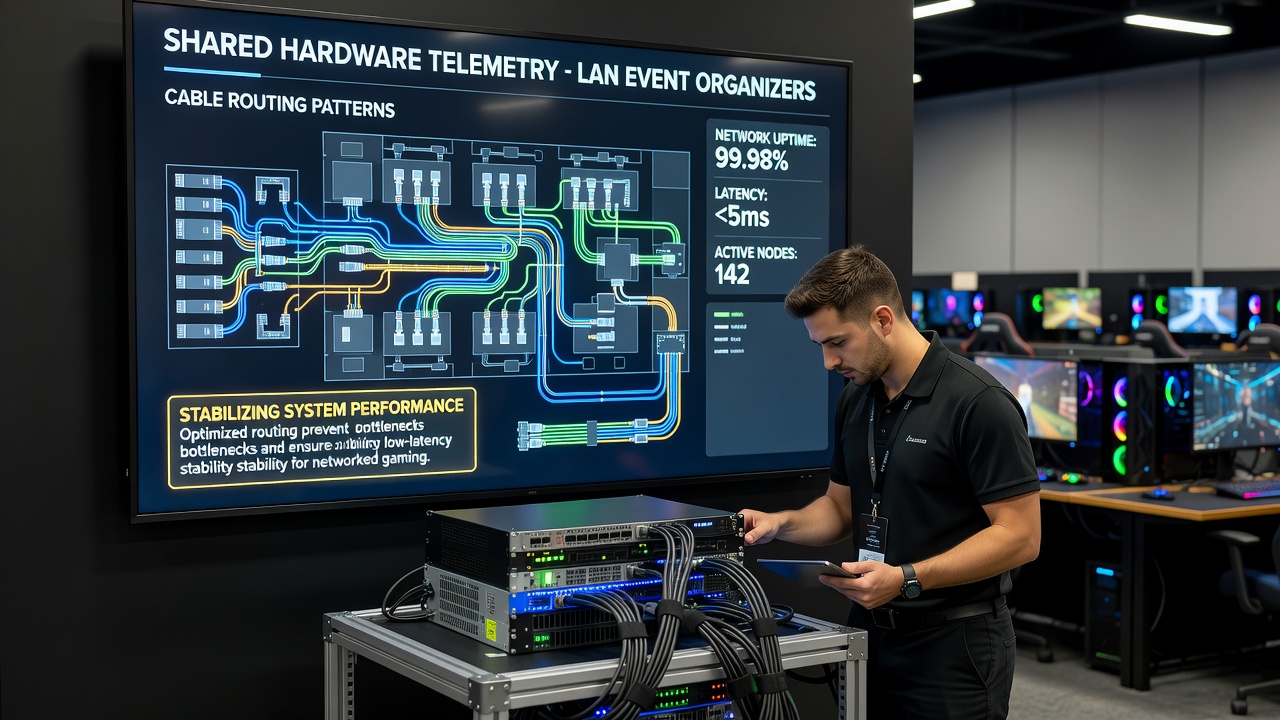
Telemetry sharing extends beyond single events as organizers compile longitudinal datasets that track performance across repeated gatherings. These datasets reveal that consistent routing protocols established early in an event maintain stability even as participant numbers increase throughout multi-day MMO campaigns. Observers note that adjustments made mid-session, such as rerouting cables around newly added power strips, further stabilize connections when player density peaks during scheduled raid windows.
Industry reports from the Entertainment Software Association highlight how hardware telemetry contributes to broader network optimization guidelines used by event planners. The guidelines emphasize testing cable paths under simulated loads that replicate real co-op conditions, including simultaneous voice communication and background data streams. Results from these tests align with findings from LAN organizers, confirming that deliberate separation of network and power infrastructure supports uninterrupted gameplay over prolonged periods.
Future Developments in Telemetry Practices
Organizers continue refining collection methods to capture finer details such as temperature effects on cable performance and vibration influences from nearby equipment. Data compiled through July 2026 suggests that incorporating environmental sensors alongside network monitors yields additional routing insights, particularly in venues with variable climate control. These expanded datasets allow planners to predict potential integrity issues before they affect large groups engaged in extended MMO operations.
Academic collaborations have begun incorporating LAN-derived telemetry into studies on scalable network design for gaming environments. Institutions across different regions contribute comparative analyses that validate routing patterns observed in practical settings, strengthening the evidence base for standardized approaches in future events.
Conclusion
Shared telemetry from LAN organizers provides concrete evidence of cable routing methods that maintain signal integrity in demanding MMO co-op environments. The documented patterns, supported by measurements from multiple international events, offer practical references for planners seeking reliable network performance across extended sessions. Continued aggregation of this data supports ongoing refinements that address the scale and duration typical of expansive multiplayer gatherings.