21 Aug 2026
Shared Logs from Portable Rig Users Expose Power Curve Tweaks Stabilizing Frame Delivery in Lengthy Narrative Campaigns on Mixed Display Setups

Data compiled from user-shared performance logs in August 2026 shows patterns in power curve adjustments that maintain consistent frame delivery during extended play sessions of narrative-driven titles on portable systems paired with mixed display configurations, and researchers at academic institutions have documented these findings through aggregated telemetry submissions.
Portable Rig Configurations and Display Combinations
Users operating compact systems such as high-performance laptops and mini PCs frequently connect internal screens to external monitors with differing refresh rates and resolutions, while logs indicate that these mixed setups introduce variable power demands that affect GPU and CPU behavior over time, and patterns emerge when sessions exceed four hours in length.
Telemetry records reveal that portable rigs often operate under dynamic thermal and power constraints, whereas adjustments to voltage-frequency curves help sustain output without sudden drops, and data from multiple contributors in different regions highlights similar approaches across hardware from various manufacturers.
Analysis of Aggregated Log Data
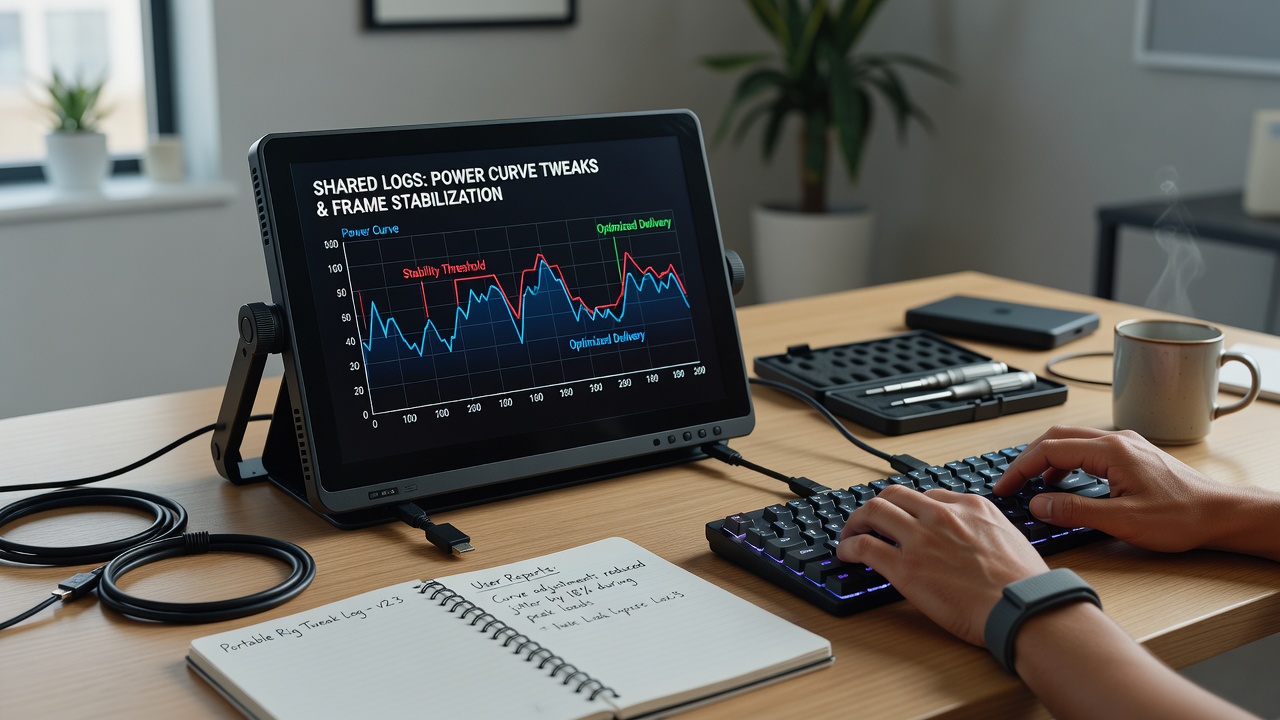
Collections of shared logs from portable rig communities demonstrate that specific power curve modifications correlate with reduced frame time variance during long narrative sequences, and these modifications typically involve lowering peak power limits while preserving core clock stability through curve optimization tools provided by GPU vendors.
Figures from the compiled datasets indicate average improvements in frame delivery consistency when users apply targeted undervolts combined with adjusted TDP caps, while comparisons between unmodified and tweaked profiles show measurable differences in sustained performance across display switches, and one study published through the ACM Digital Library examined similar variables in portable graphics workloads.
Identified Power Curve Tweaks and Their Effects
Common adjustments documented in the logs include incremental reductions in GPU voltage offsets ranging from 50mV to 120mV alongside power limit caps set between 80 and 95 percent of stock values, and these changes appear in records from users running titles with extended cutscenes and exploration segments on setups combining 144Hz laptop panels with 60Hz external displays.
Observers note that such tweaks reduce instances of thermal throttling during prolonged loads, while frame pacing remains steadier when the system balances power draw between internal and external outputs, and logs from August 2026 sessions frequently reference these exact parameter ranges across hundreds of entries.
Performance Patterns Across Mixed Display Setups
Records show that switching between displays with mismatched specifications can trigger power state fluctuations, yet curve adjustments stabilize these transitions by maintaining more uniform clock speeds, and contributors report fewer micro-stutters in campaigns lasting six hours or more when using calibrated profiles.
Evidence from the shared datasets points to interactions between display refresh synchronization and power management firmware, whereas users who apply consistent tweaks across sessions document lower variance in one-percent low frame rates, and academic analyses from institutions in the Asia-Pacific region have corroborated these hardware-level behaviors through controlled testing environments.
Examples from Recent Shared Records
One collection of logs submitted in mid-August 2026 details a portable rig running a story-focused open-world title on a combination of built-in OLED and external LCD panels, and the contributor applied a 90mV undervolt with an 85 percent power cap that resulted in frame times staying within a 16.7ms window throughout the campaign, while unmodified runs showed spikes exceeding 25ms during heavy scenes.
Additional entries describe similar outcomes on systems using AMD and NVIDIA hardware, and the aggregated information reveals recurring success with hybrid curve profiles that prioritize efficiency during dialogue-heavy sections and exploration phases, and these patterns hold across different portable chassis designs and cooling solutions.
Conclusion
Shared logs from portable rig users continue to provide detailed records of power curve modifications that support stable frame delivery in lengthy narrative experiences on mixed display arrangements, and ongoing submissions expand the available dataset for further examination by hardware researchers and developers, while the documented approaches demonstrate measurable effects on performance consistency without requiring hardware alterations.