28 Oct 2026
Tracing Collective Benchmark Submissions Revealing Thermal Threshold Patterns Across Varied Case Designs During Extended RPG Campaign Playthroughs
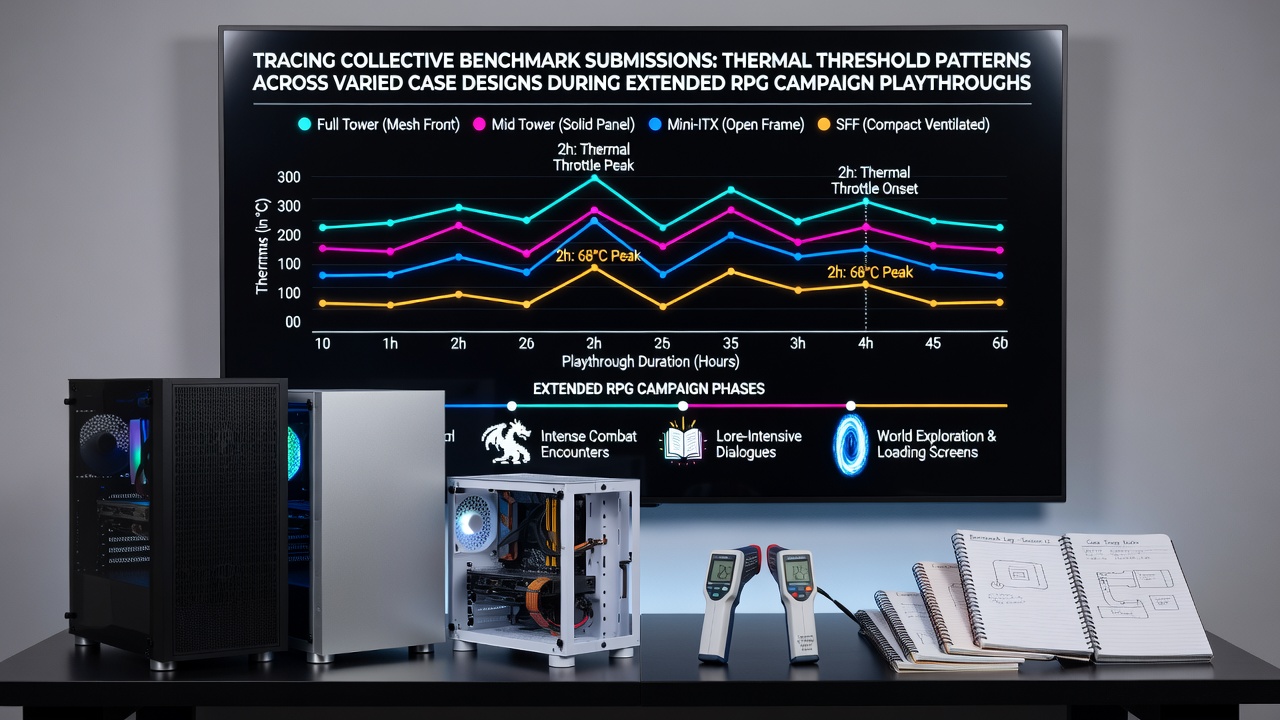
Collective benchmark submissions from gaming communities have started to map out thermal threshold patterns that emerge when players run extended RPG campaign sessions across different PC case designs, and these datasets highlight consistent behaviors tied to airflow layouts, material choices, and component density. Observers note that participants often log temperatures during campaigns lasting eight hours or more, which produces records showing how mesh panels, sealed frames, and hybrid designs respond under sustained GPU and CPU loads typical of open-world RPG titles.
Researchers at the European Commission's Joint Research Centre have compiled similar user-submitted logs to examine how case geometry influences heat dissipation during continuous gameplay periods, and their analysis covers submissions gathered throughout 2025 into October 2026 when new driver updates altered power draw profiles for several popular graphics cards. Data indicates that compact cases with restricted intake paths reach critical temperature zones faster than mid-tower configurations equipped with additional exhaust fans, while full-tower designs maintain steadier readings even after prolonged sessions.
Data Aggregation Methods Used by Communities
Enthusiasts gather these benchmarks through shared spreadsheets and hardware monitoring threads where individuals upload sensor readings captured at regular intervals during RPG playthroughs, and this approach allows patterns to surface across dozens of case models rather than isolated tests. Submissions typically include ambient room temperatures, fan speed curves, and power limits alongside case specifications, which enables cross-referencing that reveals threshold points where throttling begins in specific layouts.
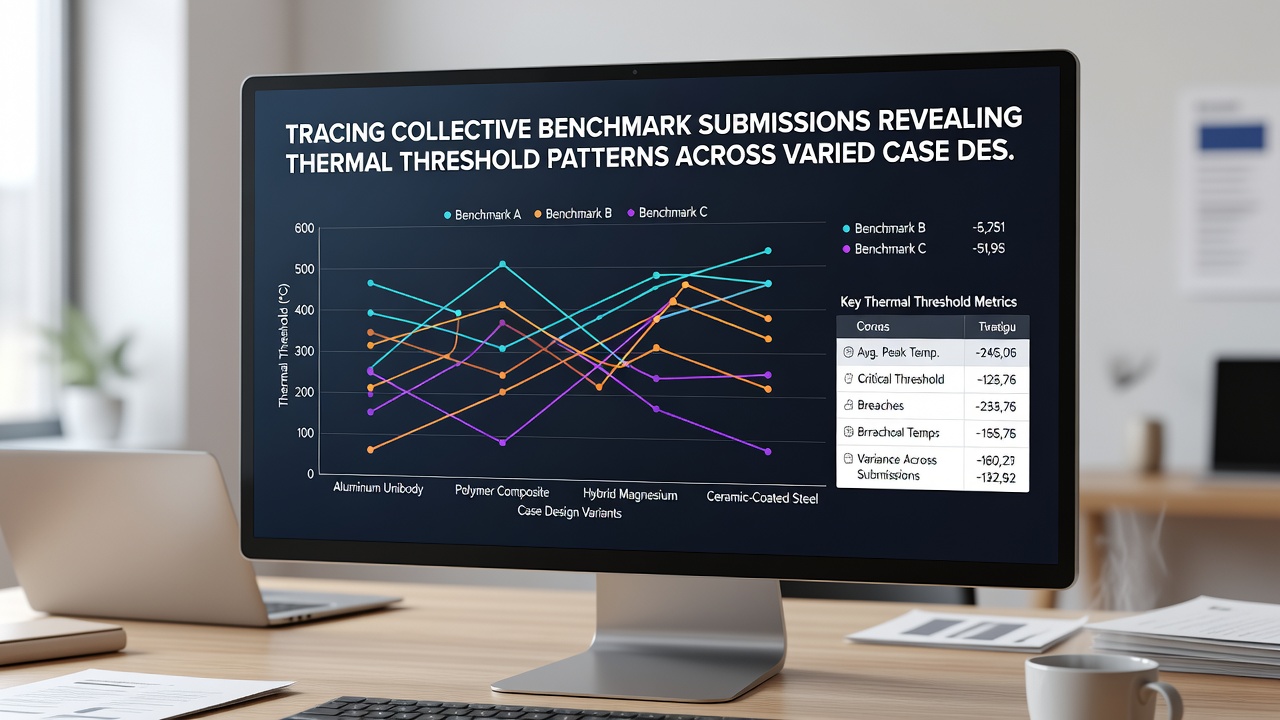
Those who have examined thousands of entries report that mesh-fronted cases frequently sustain lower average core temperatures during the mid-game phases of long campaigns, whereas aluminum unibody frames show sharper spikes once internal air volume saturates, and these distinctions become clearer when participants standardize test conditions to the same title and graphics settings. Aggregated figures reveal that the transition from 60 to 90 minutes of play often marks the point where smaller cases diverge most noticeably from larger ones in thermal headroom.
Thermal Behaviors Across Case Categories
Benchmark pools separate submissions into categories such as open-air, tempered-glass sealed, and filtered compact designs, and each group exhibits distinct threshold curves when tracked over multi-hour RPG sessions. Open-air frames tend to plateau at moderate temperatures because direct component exposure aids convective cooling, while sealed glass panels trap heat near the CPU socket until exhaust paths activate at higher speeds, and this dynamic appears repeatedly in logs collected from October 2026 onward.
Compact designs with vertical GPU mounts display earlier onset of elevated junction temperatures compared with horizontal layouts, and participants document these shifts through repeated runs of the same campaign chapters to isolate case-specific effects from game-engine variables. Evidence suggests that adding front intake fans reduces the frequency of threshold crossings in mid-sized cases, whereas top-mounted exhaust configurations produce more stable readings once equilibrium establishes after the first two hours of play.
Patterns Emerging from Extended Session Logs
Longer playthroughs expose cumulative effects that short benchmarks miss, and collective submissions show that RPG campaigns with frequent loading screens and exploration segments create repeated thermal cycling that stresses case ventilation differently than continuous benchmark loops. Observers tracking these cycles note that filtered intakes accumulate dust over repeated sessions, which gradually narrows the margin before thermal limits trigger in densely packed builds.
Submissions from October 2026 include records captured after users applied updated firmware that adjusted fan response curves, and these entries demonstrate narrower temperature bands across varied case types once participants recalibrated their monitoring software. Patterns also indicate that cases with modular drive cages maintain better airflow consistency during late-session peaks because component repositioning reduces hot-spot formation near the motherboard VRM area.
Implications for Hardware Longevity and Performance
Collected data links sustained operation near thermal thresholds to measurable impacts on component lifespan, and researchers from Australia's CSIRO have referenced similar community datasets when studying power efficiency in consumer electronics under variable loads. Case designs that delay threshold crossings allow GPUs and CPUs to maintain boost clocks for longer stretches during campaign segments, which translates to smoother frame delivery without the need for aggressive power limits.
Users who contribute multiple entries from the same build often record how minor modifications such as repositioning cables or swapping fan orientations shift the point at which temperatures stabilize, and these incremental changes accumulate into clearer guidelines for selecting cases suited to extended RPG sessions. The resulting patterns provide objective reference points that hardware reviewers and builders consult when comparing new models against established thermal baselines.
Conclusion
Collective benchmark submissions continue to refine the understanding of how case designs manage heat during extended RPG campaign playthroughs, and the patterns extracted from these datasets offer measurable distinctions between airflow strategies without relying on controlled laboratory conditions alone. As more participants contribute standardized logs through October 2026 and beyond, the accumulated records strengthen the ability to predict thermal behavior across a wider range of builds and session lengths.